Small Split-Level Garden Design in Islington, North London
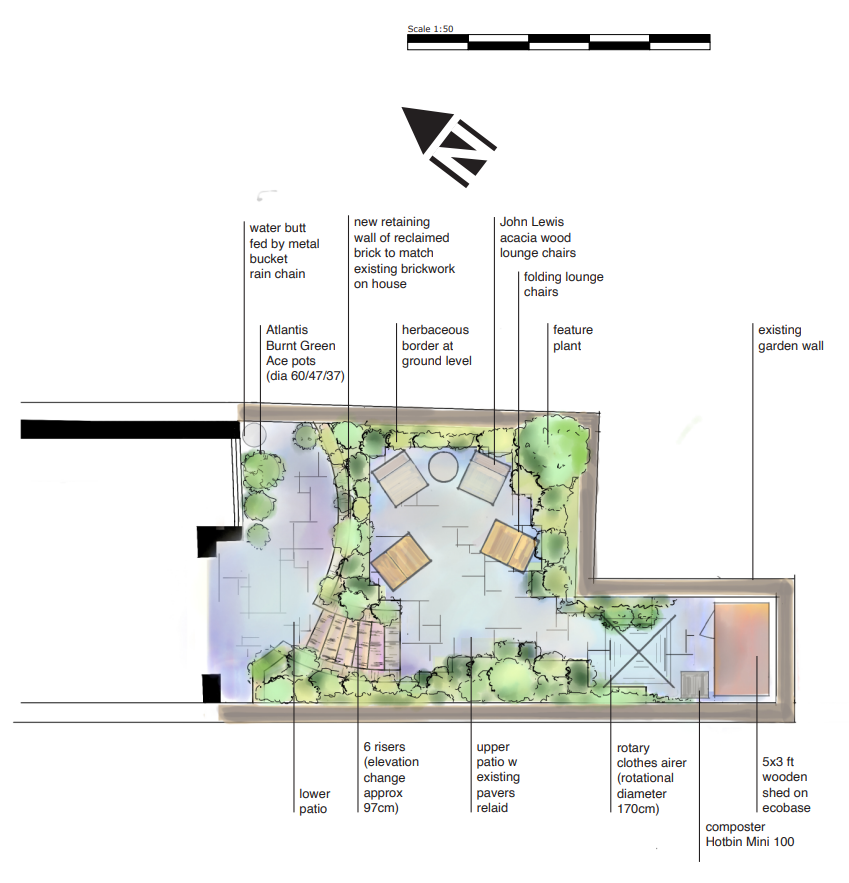
This small garden in Islington sits behind a period townhouse and is arranged over two levels, with quite a big drop between them. There was not much room to play with, so the garden design had to be very disciplined about what went where. The existing space had a few mature shrubs and plenty of character, but the lower deck had weathered badly and the level change made the garden harder to use than it needed to be.
The client wanted a garden that could work socially but still leave room for practical things such as storage and composting. They also wanted space to garden, and they wanted the whole scheme to be as environmentally friendly as possible. Because the house and garden already had age and character, I did not want the finished garden to feel too new or overly polished. The materials needed to weather well, and the planting needed to feel natural rather than overly arranged.
Designing a Small Islington Garden Around the Levels
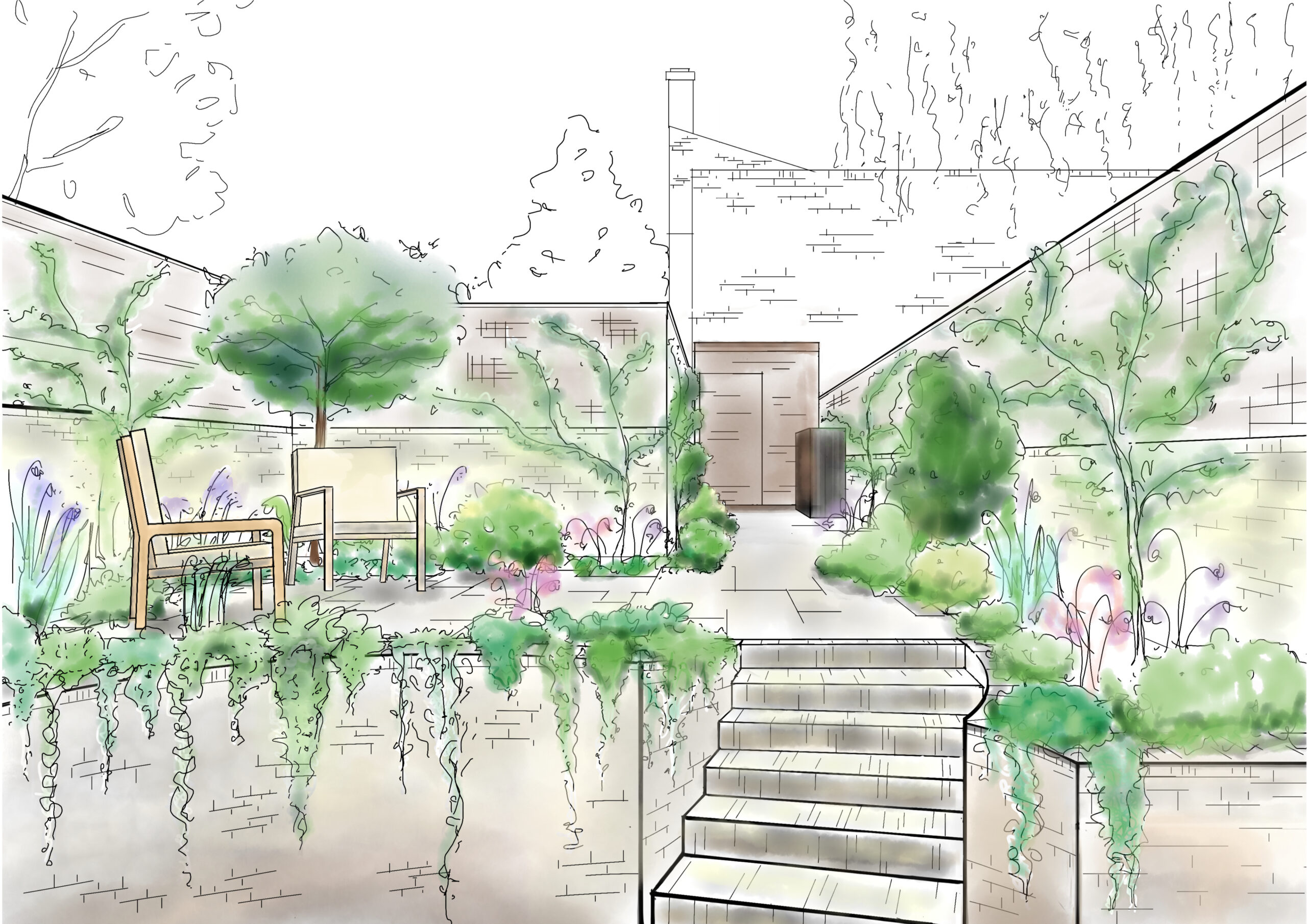
The height difference between the two parts of the garden shaped most of the design. A retaining wall was unavoidable, but rather than put in a straight wall that would cut across the space, I used a curve so the lower level felt more enclosed by planting and a little softer.
That curve is also very visible from the window seat inside the house, so it had to work from indoors as well as outside. It gives the eye something to follow and helps the planting feel as though it wraps around the lower part of the garden, rather than simply sitting along the edges.
Because the space is small, I also had to position the practical elements carefully. The shed and compost area all needed to be easy to reach, but I did not want them to dominate the view or take over the parts of the garden intended for sitting.
Making the Garden Feel as Though It Has Always Been There
The client liked weathered materials and wanted the garden to feel settled rather than newly installed, which suited the period house well. That meant choosing materials that would sit comfortably with the existing character and improve as they aged, rather than trying to make everything look too clean or uniform.
The same thinking carried through into the planting. The client liked plants at different heights and a slightly looser look, so the borders were designed to have variation without becoming messy. In a garden this small, that balance is important because there is nowhere for weak planting to hide, and everything is seen at close range.
Planting Design for a Small Garden in Islington
The borders are narrow, so there was no space for deep layers of planting. Instead, the planting had to work vertically as well as horizontally, with different heights helping create interest without using too much of the available floor space.
Year-round interest was important because the garden is visible from the house in every season. That meant choosing plants that would hold their shape for longer and mixing them with others that would come through at different times, so the garden did not rely on one short period of colour.
The planting around the curved wall will be especially important because it helps soften the level change and make that part of the garden feel more inviting. The aim is for the wall to sit within the planting rather than feel like a hard boundary between the two levels.
Keeping the Practical Side of the Garden Under Control
Small gardens still need to deal with ordinary things, and in this case that included storage and composting as well as a clothes dryer. The garden design therefore had to fit those uses in without allowing them to take over visually.
That meant keeping the social areas clear and making sure the practical elements stayed easy to use without becoming the first thing you noticed. In a larger garden those things can often be pushed further away, but in a small Islington garden there is very little spare space, so the layout has to work harder.
A Small Garden Design in Islington Ready to Be Built
The garden is due to be built later this year, so the finished planting will develop once the scheme is in place, but the curved retaining wall is already the key part of the design because it solves the level change and gives the garden a much softer shape at the same time.
For a garden designer working in Islington and across North London, this is the kind of project where careful decisions make more difference than adding lots of features. The space is small, but by working with the levels and keeping the planting focused, the garden should feel easier to use and much more settled once it is finished.
Explore more: