The Bee Cause Garden at Blenheim Palace Flower Show
The Bee Cause Garden was created for the Blenheim Palace Flower Show in conjunction with Friends of the Earth, with the aim of drawing attention to the decline in bee populations and encouraging people to think about what that means for the environments around us. Because it was a temporary show garden, there was no existing landscape to work with in the usual way, so the whole idea had to be built from scratch and communicate its message quickly to people walking past.
The garden needed to do more than look attractive. It had to stop people, make them curious and give them something obvious to talk about, because without that reaction the message about bee habitats and declining numbers would have been much easier to miss.
The Brief for the Blenheim Flower Show Garden
Friends of the Earth wanted the garden to show how serious the decline in bee populations had become and to make the issue understandable through the design itself, rather than relying on lots of explanation around it. The idea developed around creating two contrasting worlds, one where bees had somewhere to feed and live, and another where that life had largely disappeared.
That contrast needed to be immediate, so visitors could understand the point as they moved through the garden. One side was full of bee-friendly planting and colour, while the other was deliberately stark and stripped back, showing a very different outcome.
Designing a Garden That Had to Make People Stop
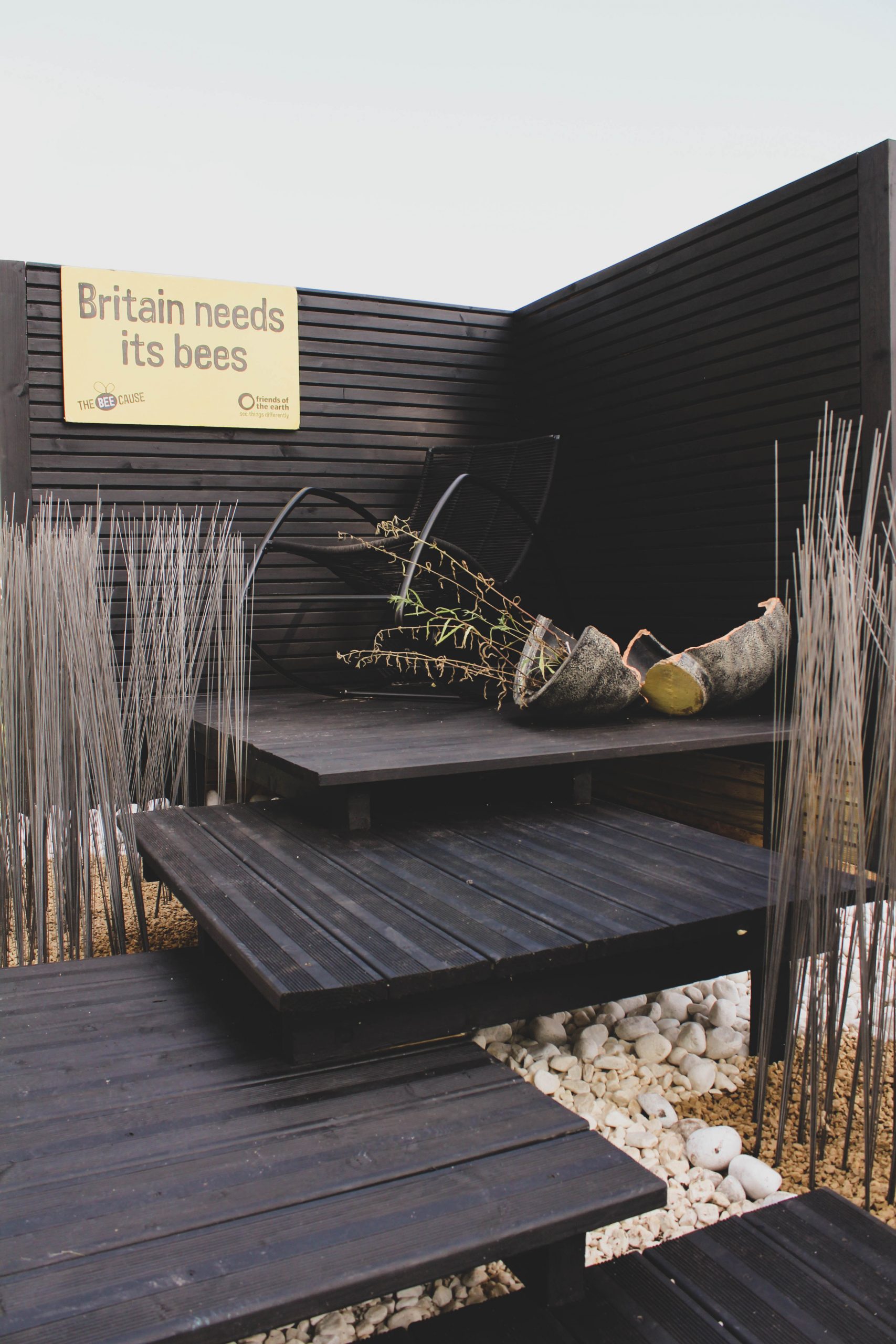
There were also practical restrictions because no digging was allowed within the grounds of Blenheim Palace. The whole garden therefore had to be built on a raised structure, and rather than treating that as a problem, I used the levels as part of the design.
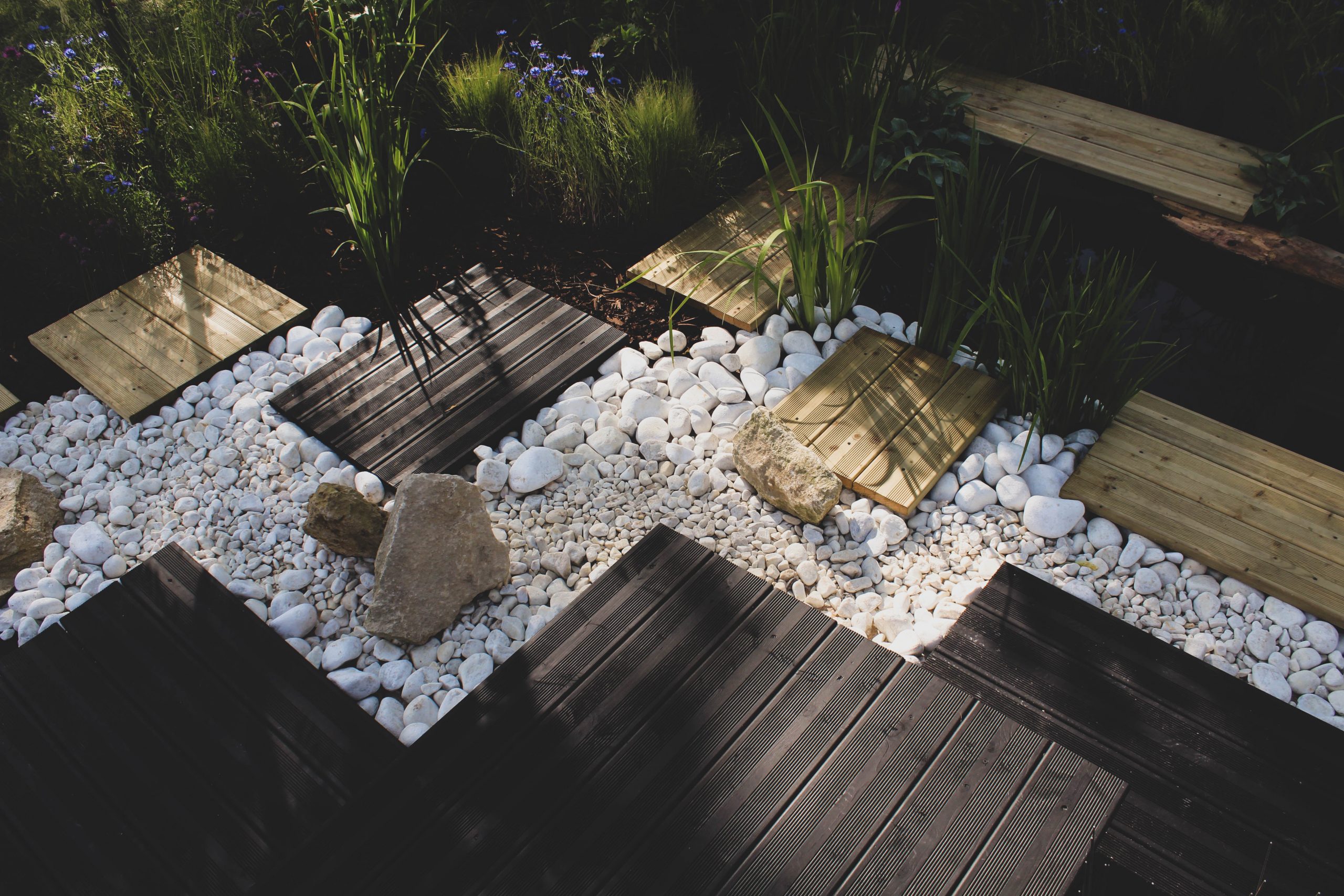
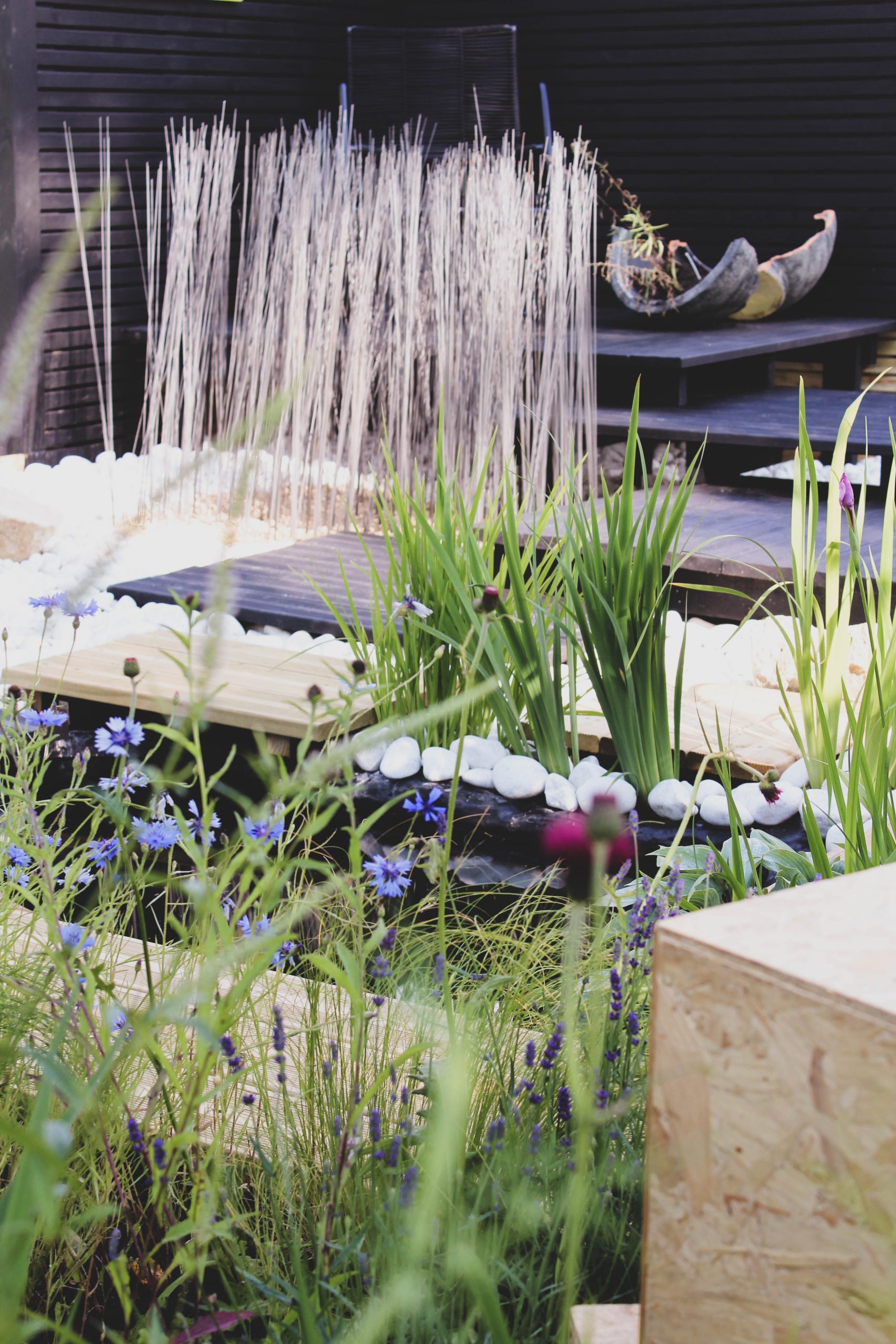
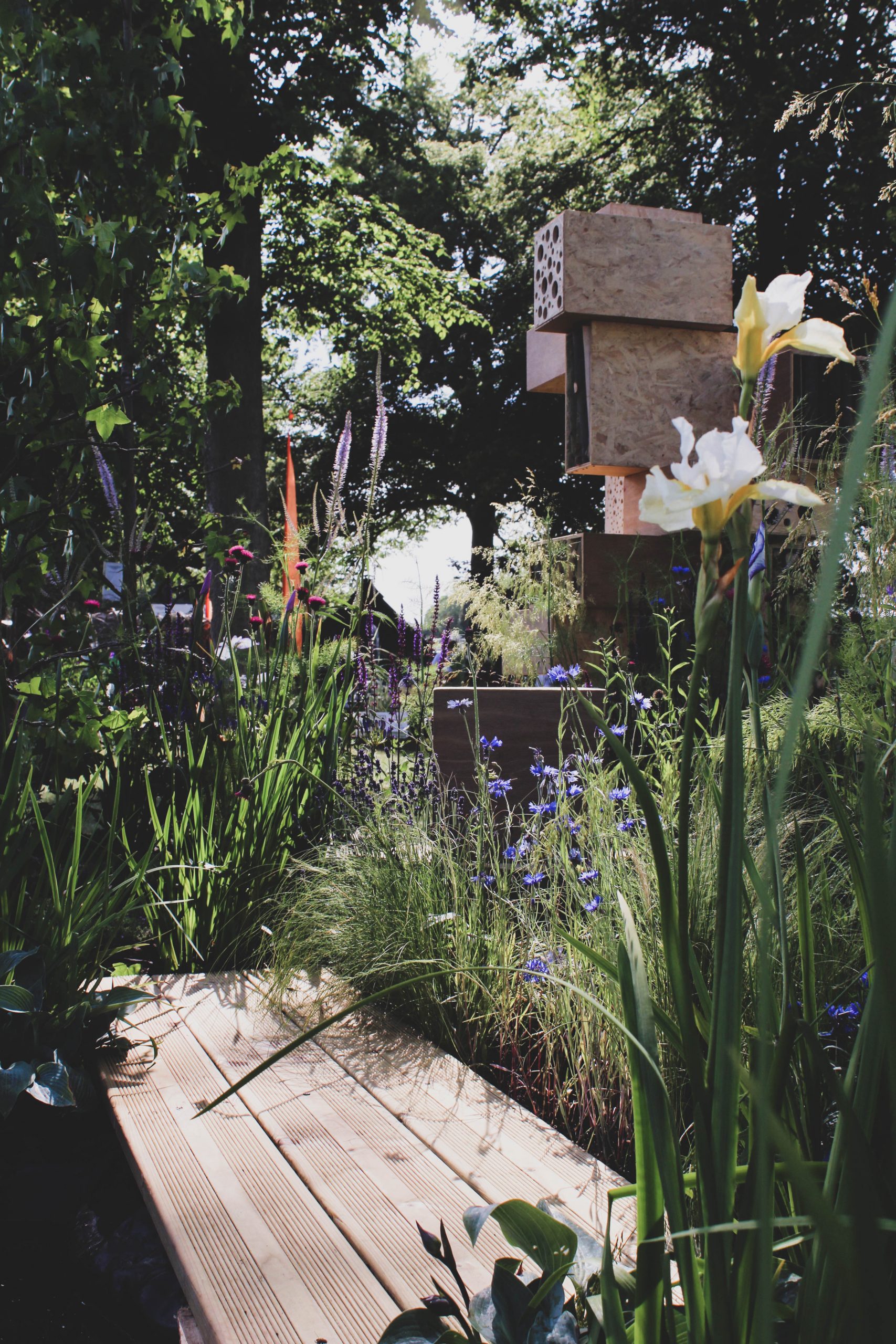
The two sides were built higher, with a lower valley running between them so visitors could walk directly through the middle. Two reflection pools sat within that central area, which helped separate the two sides and made the contrast between them even more noticeable as people moved through the space.
Two Very Different Worlds
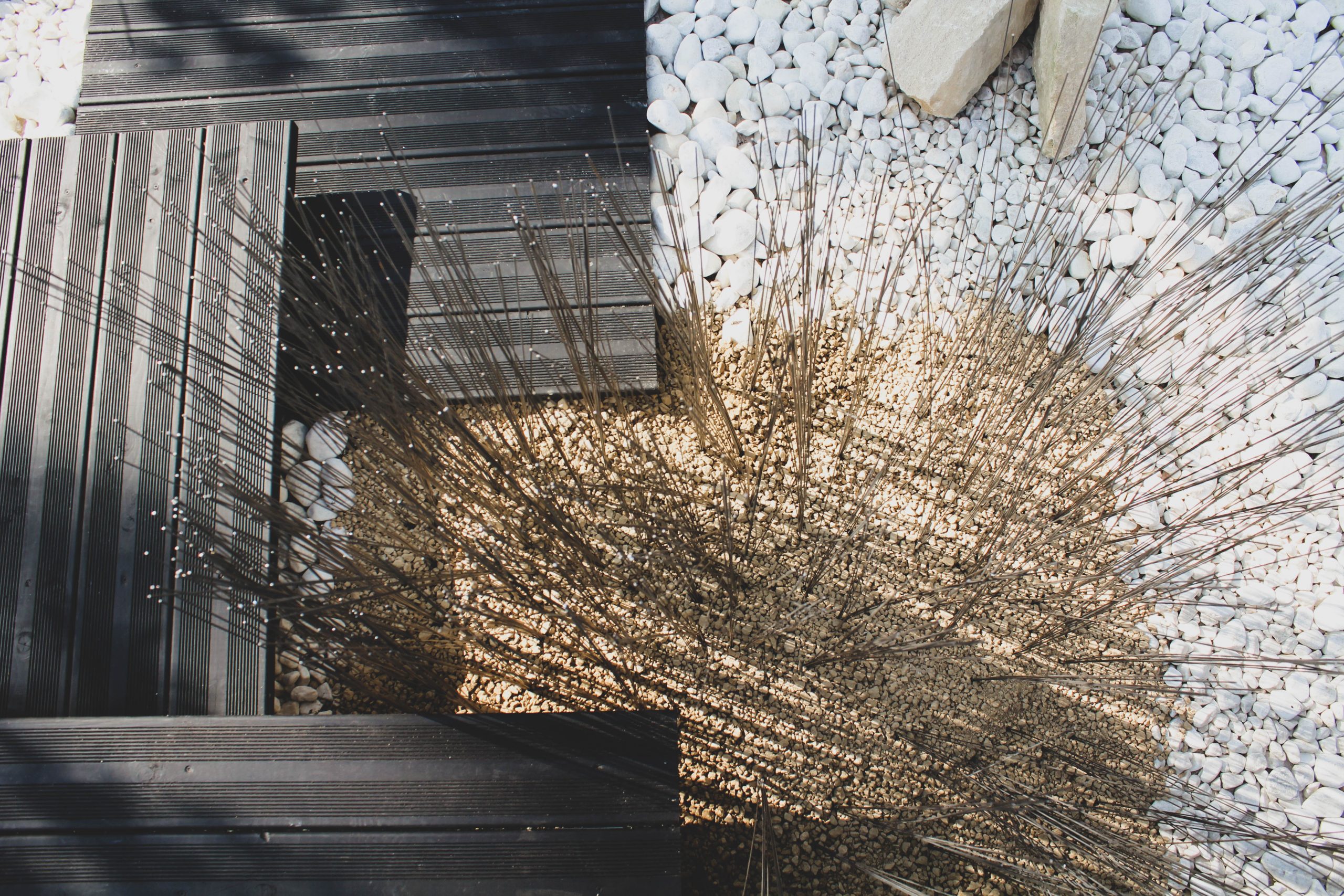
The post-apocalyptic side used a black and white palette and was intentionally severe. Around 100 kilos of steel rods rose from the ground in place of tall grasses, creating movement without using living planting and making that side feel empty in a very obvious way.
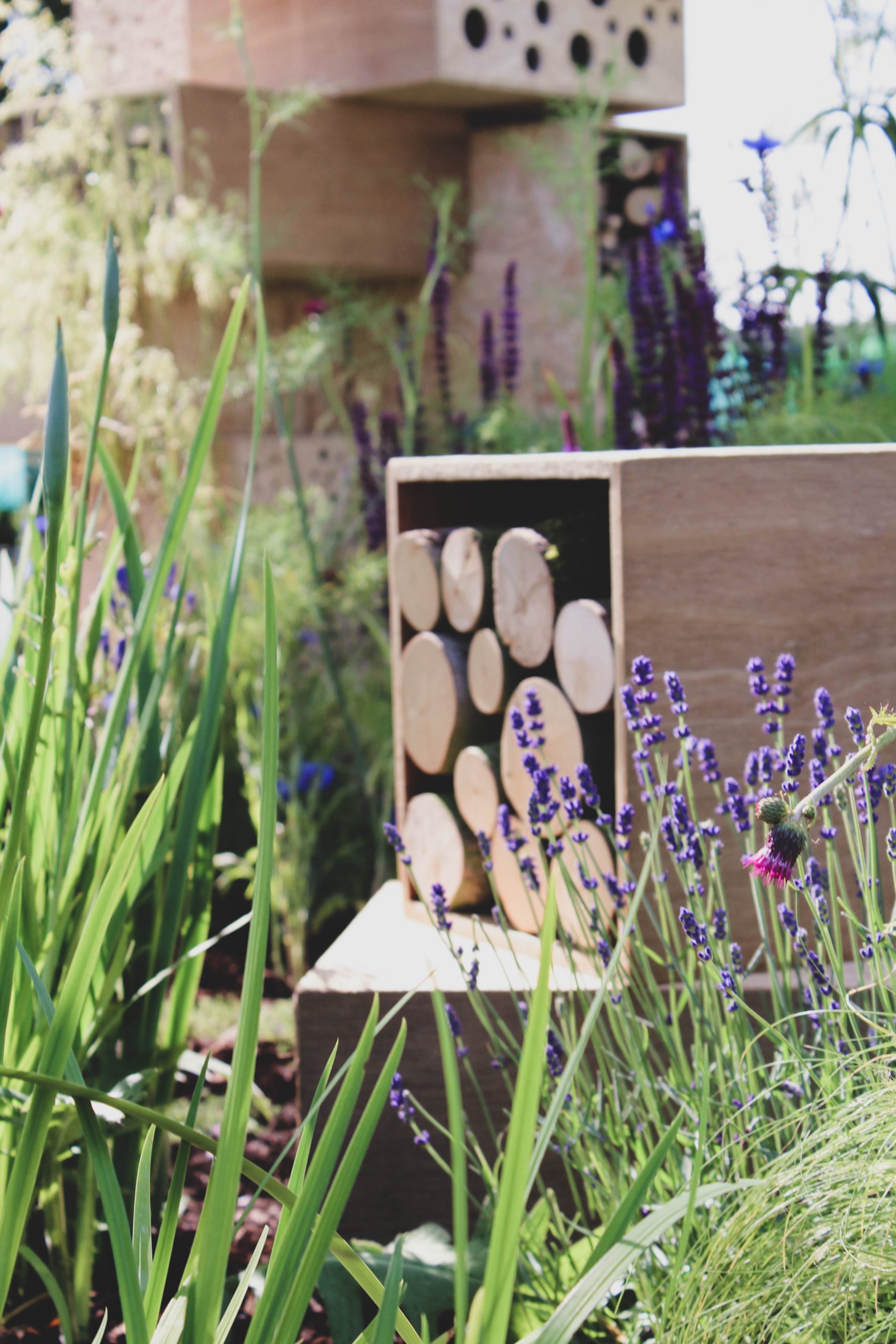
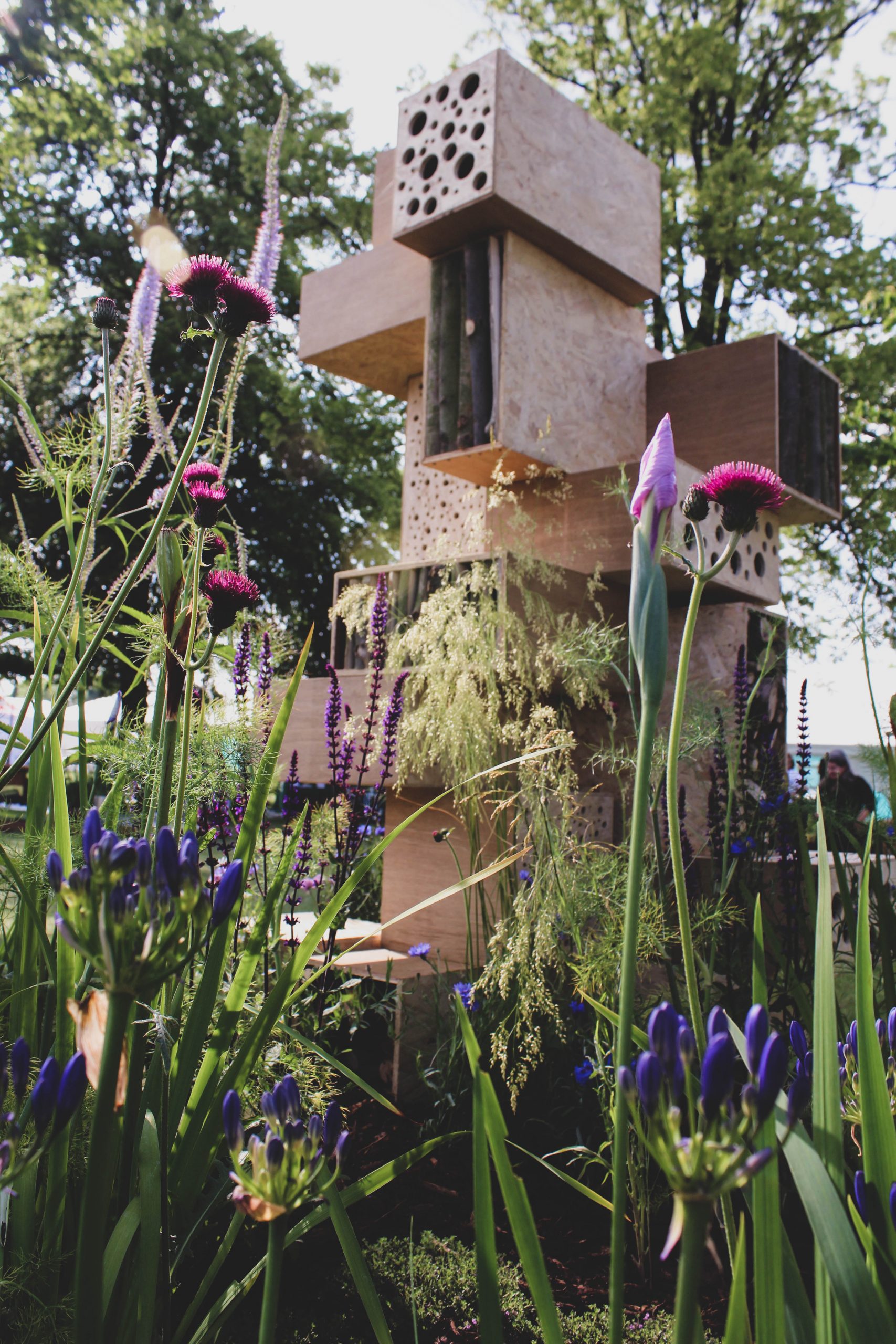
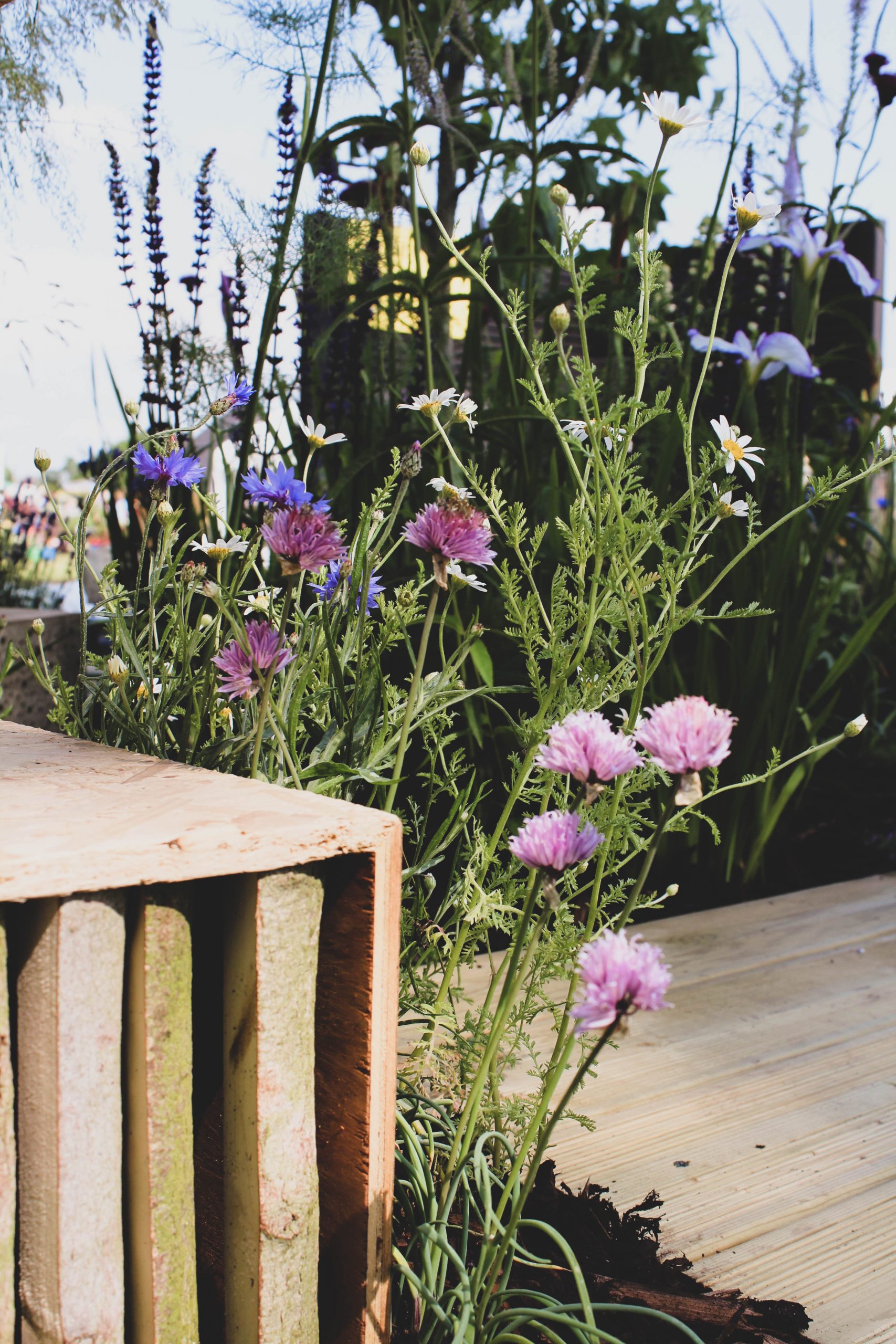
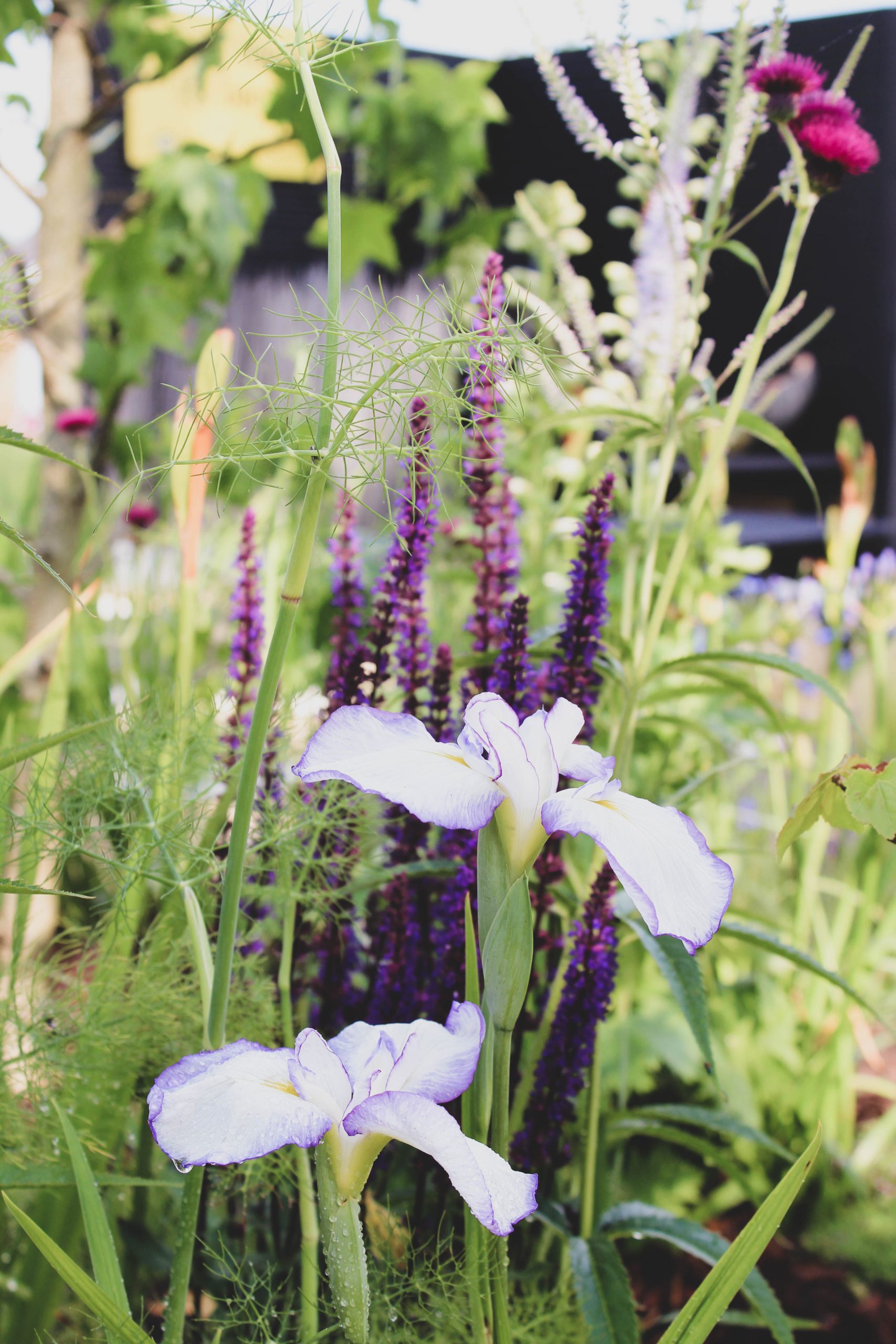
On the opposite side, the garden was full of bee-friendly planting, including wildflowers, other perennials and trees. The change in colour and texture was immediate, so people could see the difference between a garden that supports life and one that does not.
A large insect hotel was also built upwards like a small skyscraper, turning the usual idea of a tower around by making the building for insects rather than people. It gave the garden a strong focal point and made the message easier to understand without needing much explanation.
Planting for Bees at Blenheim Palace
The planting on the bee-friendly side needed to be genuinely useful as well as visually strong, so the plants were chosen to provide food and habitat while still making a clear contrast with the other side of the garden.
Because this was a show garden, everything also had to work immediately rather than relying on years of growth. The planting therefore needed enough variety and density to make the difference obvious from the start, while still feeling like a real garden rather than a display built around a message.
A Show Garden Designed to Start a Conversation
What worked best was the simple fact that people could walk down the valley with one world on their left and the other on their right. The contrast was easy to understand, but strong enough to make people stop and ask what the garden was about.
That was really the point of the whole project. It was not there simply to be another attractive show garden, it was there to make people think about what happens when habitats disappear and what can be done differently in their own gardens. The two sides, the steel grasses and the bee hotel gave people something concrete to react to, which made the conversation much easier to start.
Explore more: