Contemporary Garden Design in East Dulwich, South London
This garden in East Dulwich, South London, sits behind a period house and is more square in shape than many of the long, narrow gardens you find in this part of London. When I first saw it, the space was leafy and green because of the trees in neighbouring gardens, but it sat a step down from the kitchen and did not feel especially inviting to use.
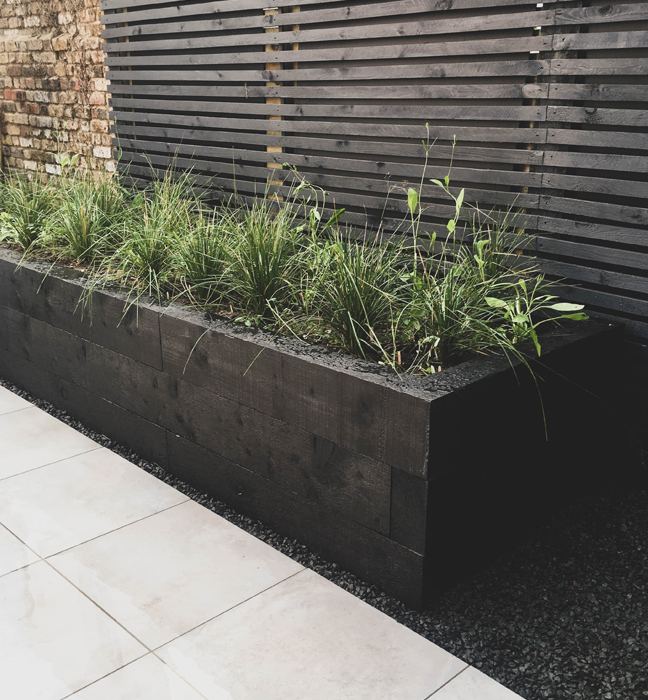
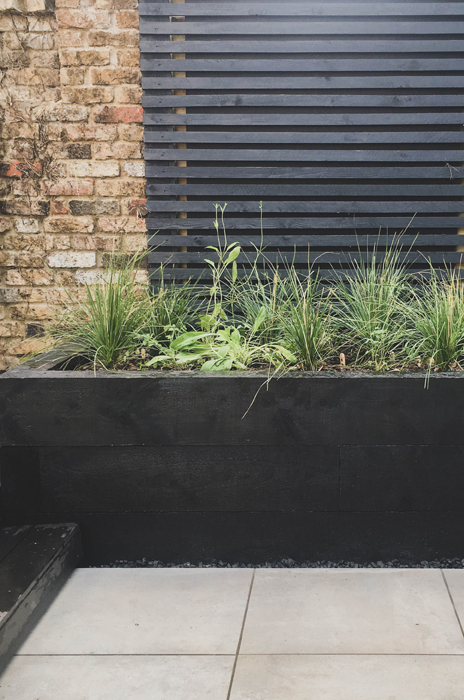
The clients wanted to make much more of the garden and use it at different times of day, whether that meant having breakfast outside, reading quietly or spending time with friends. They also wanted raised beds and preferred a more contemporary look, so the garden design needed to feel quite controlled without becoming too rigid.
The Brief for This East Dulwich Garden
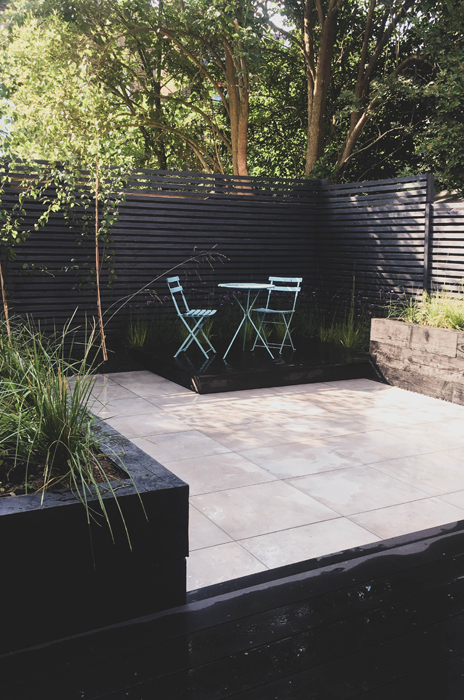
One of the main things I had to think about was how to create clearly defined areas within a square space. The clients wanted somewhere to dine and somewhere to lounge, but if those uses were simply placed side by side, the garden risked feeling static.
The step down from the kitchen was another important part of the design because it created a slight barrier between the house and garden. I wanted the transition outside to feel easier, so rather than treating the level change as something to hide, I used it to organise the garden.
Using Levels to Connect the House and Garden
A decked area was introduced at the same height as the kitchen threshold, which meant the clients could step straight out from the house onto a level surface before moving further into the garden. This became a useful pause between indoors and out rather than an abrupt drop into the main garden.
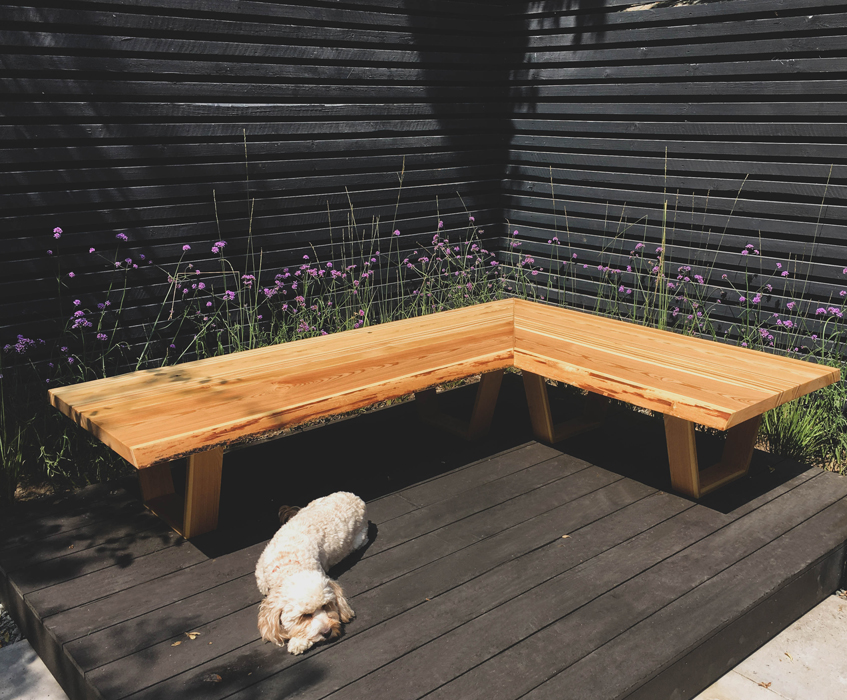
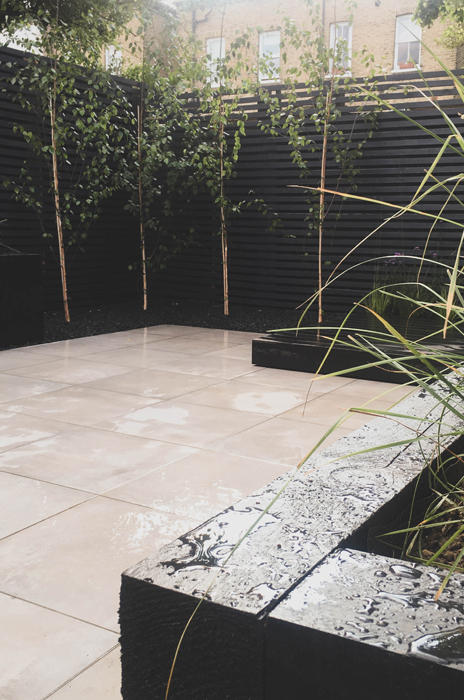
From there, the garden steps down into the dining area, while the lounge sits slightly higher again at the far end. Using the levels in this way gave each part of the garden a clear purpose and encouraged movement through the whole space rather than concentrating everything close to the house.
It also helped the square shape feel less flat, because each section had a slightly different relationship with the house and the rest of the garden.
A Contemporary Planting Scheme for East Dulwich
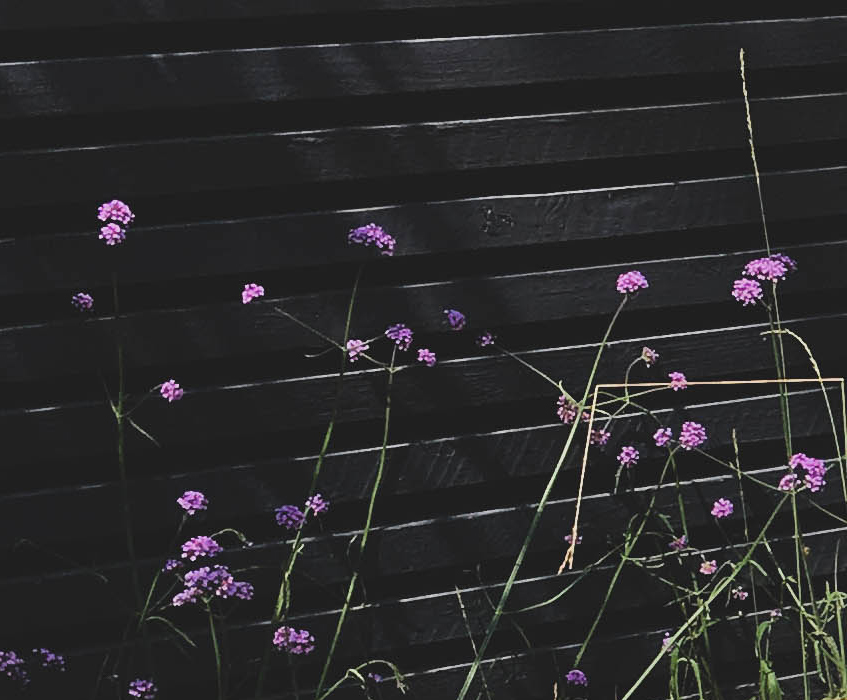
The clients preferred straight lines and a more pared-back contemporary style, so the planting was kept relatively simple. The palette was restrained rather than highly varied, but I still wanted the garden to feel soft enough to sit comfortably within the leafy surroundings.
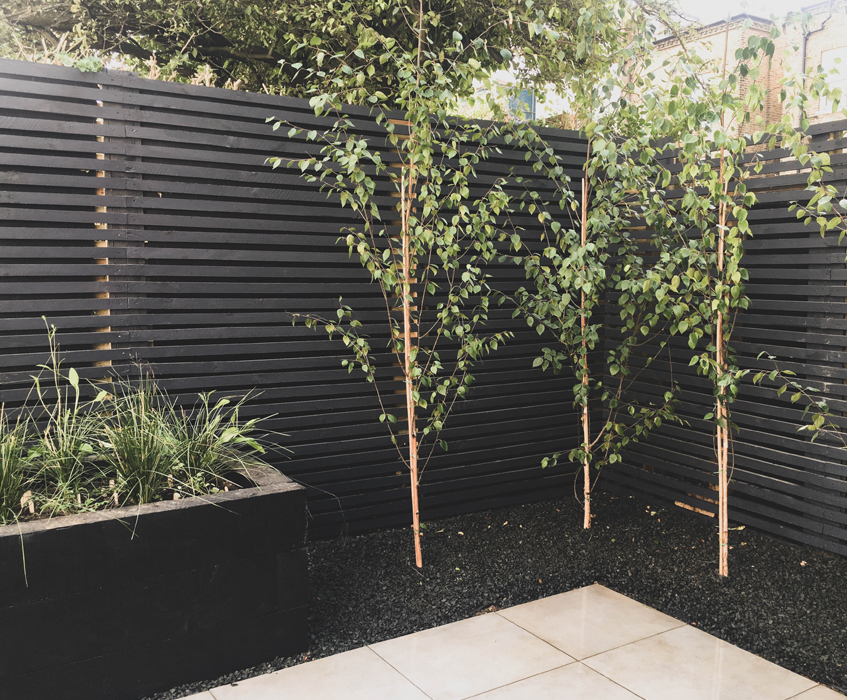
The planting had a slightly wildflower feel, but with fewer plant types repeated through the beds so the effect stayed controlled. Silver birches were introduced to add height and make an immediate difference to the space, while the lighter trunks also worked well with the more monochrome character of the overall design.
Creating Movement Through a Square Garden
What worked particularly well was the way the changes in level created a natural sequence through the garden. You step out from the kitchen onto the deck, move down into the dining area and then rise again towards the lounge, so each part feels connected without everything being visible as one flat square.
That sequence gives the garden more reason to be used throughout the day and makes the whole space feel more interesting to move through. The raised beds and planting sit within that structure rather than competing with it, which keeps the design simple while still giving the garden enough variation.
An East Dulwich Garden Built Around Everyday Use
The finished garden now gives the clients several different ways to use the space without making any one area feel dominant. The dining area works well for guests and everyday meals, while the lounge at the rear feels more removed from the house and suits quieter use.
For me, the introduction of levels is what made the biggest difference because it changed both how the garden works and how it feels when you step outside. Instead of the kitchen door opening onto a space that felt slightly disconnected, there is now a much more natural progression from the house into the garden.
Explore more: