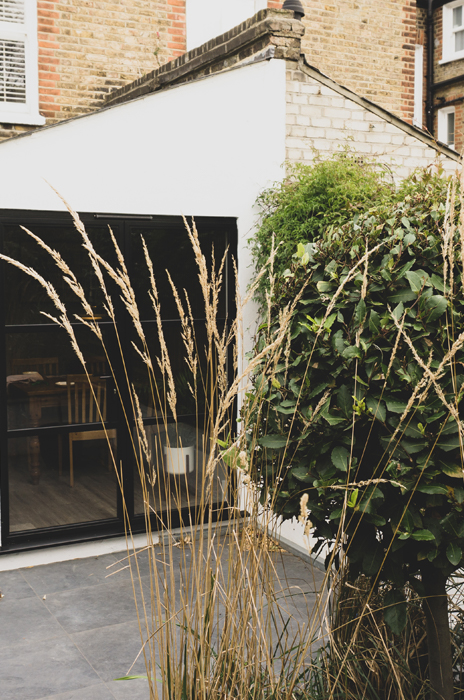

Family Garden Design in Gipsy Hill, South London
This family garden in Gipsy Hill sits behind a period house in a leafy part of South London. At around 25 metres long, it had the proportions you often find with older London houses, a relatively narrow garden stretching away from the back of the property.
The existing garden was based around a central lawn with planting along the borders. There were gaps within the planting and, once winter arrived, much of the garden felt quite bare. There were established plants and trees worth keeping, so the starting point wasn’t to replace everything, it was about working with what was already there and giving the garden a stronger structure.
The Brief for This Gipsy Hill Garden
This needed to be a proper family garden. Rather than designing it around one particular use, we wanted different members of the family to be able to enjoy the garden in their own way.
It also needed to have some flexibility built into it. Families change and the way they use a garden changes with them. The intention was to establish an overall design that worked from the beginning but wouldn’t stop the owners adapting individual areas as their needs changed.
Keeping some of the existing planting was also important. Mature plants give a garden something that can’t simply be recreated overnight, so wherever it made sense, these were incorporated into the new garden design.
The Existing Garden
One of the main issues with the original layout was the long central lawn. It emphasised the length of the garden and meant that much of the space could be seen in one view from the house. The borders ran alongside it, but gaps in the planting weakened their impact. This became particularly noticeable during winter when the garden lost much of its presence. Rather than treating the length of the garden as a problem to hide, the new design used it differently.
Designing a Long London Garden
I divided the garden into a series of sections so that moving through it became part of the experience. Instead of looking straight from the house to the far end, the layout leads you from one area into another. Routes through the planting help draw people onwards while giving them places where they can stop or spend time.
The movement of the sun was important when deciding where these areas should sit. I looked at where the light fell through the day and considered how the family was likely to use different parts of the garden at different times.
Existing trees and established planting also influenced the layout. The design had to work around the parts of the garden we wanted to retain rather than treating the site as a blank space.
Breaking up the length made a significant difference. The garden still feels generous, but you don’t take it all in at once. There is more reason to move through it and see what is beyond the next section.
Planting Design for a Family Garden
The planting was intended to feel relaxed, with a strong underlying structure holding everything together. That structure was particularly important because the previous borders lost much of their impact in winter. The aim wasn’t to make the planting rigid or overly formal, but to give the garden enough presence that it continued to work when some plants had died back.
Existing planting was brought into the new scheme where appropriate, allowing the new garden to retain some of its maturity from the outset. The planting also works with the way the garden is divided. Rather than simply sitting around the edges, it helps define the different areas and affects how you move between them.
A Gipsy Hill Garden Designed to Change with the Family
One of the things I like most about the finished garden is that the layout gives the family different places to use without dictating exactly what must happen in each one. They can make changes as the children grow or as the way they use the garden changes. The main structure can remain while individual areas develop with them.
The new layout has also changed the relationship between the house and garden. Instead of the garden simply beginning beyond the back doors, there is now something to look into from inside the house. The owners summed that up rather nicely after spending their first summer with it:
“We have really loved the summer so far and gazing into the garden from the new doors.”
For me, that’s an important part of a successful garden. It should work when you’re outside using it, but it should also give something back to the house and the people living there throughout the year.
Explore more: